Rendered and Masonry Walls
Exterior walls are checked for dirt, flaking coatings, cracks and signs of surface moisture. Sound preparation gives masonry paint a stable base and helps produce an even finish.
Serving Shrewsbury, England & surrounding areas
Est. 2026
Exterior Painting · Shrewsbury
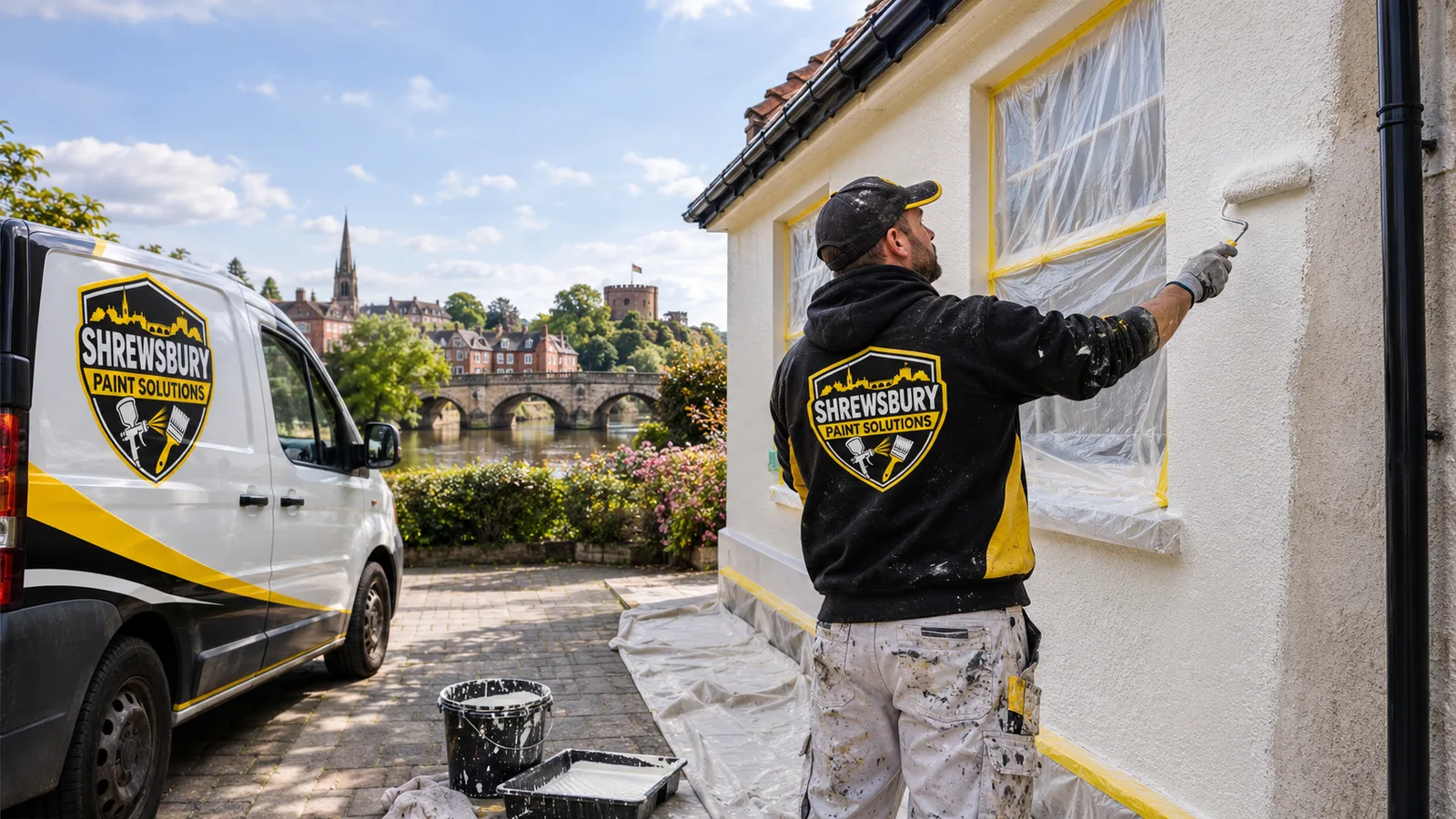
Careful preparation and suitable exterior finishes for walls, doors, windows, fences, sheds and log cabins across Shrewsbury and nearby Shropshire villages.
Exterior Decorating
If you are comparing exterior painters in Shrewsbury, look closely at the preparation as well as the final colour. Outdoor paint has to cope with rain, changing temperatures, sunlight and damp conditions. Loose coating, dirt, algae and failed sealant can all shorten the life of a new finish if they are simply painted over.
Shrewsbury Paint Solutions is run by Stephen Meredith and was founded in 2026. As an owner-operated business, Stephen assesses the surface, access and amount of preparation required before agreeing the work. Smaller exterior jobs are welcome alongside larger painting projects. Customers can send photographs on WhatsApp for an initial estimate, followed by a closer assessment where needed.
Shrewsbury has a varied mix of property types, including older buildings near the town centre and later housing around areas such as Meole Brace and Monkmoor. The right method depends on the actual substrate and its condition, rather than the age or style of the property alone. We choose suitable finishes for each surface and use Dulux Trade paints where appropriate.
Surfaces & Finishes
Exterior walls are checked for dirt, flaking coatings, cracks and signs of surface moisture. Sound preparation gives masonry paint a stable base and helps produce an even finish.
Timber and previously painted doors can be cleaned, sanded and prepared before a suitable exterior system is applied. Hinges, glazing and surrounding surfaces are protected during the work.
Window frames, sills, fascias and other painted woodwork need particular attention at joints, edges and areas where an old coating has started to fail.
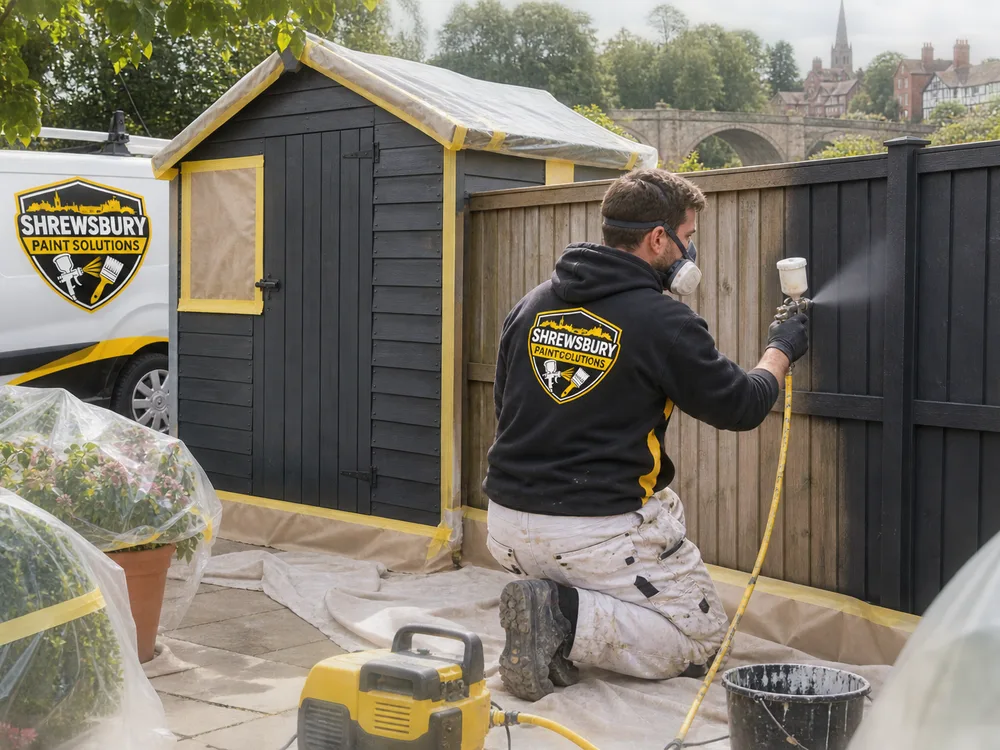
Fence panels, gates and sheds can be refreshed with a coating selected for the material and existing finish. Nearby paving, plants and fittings are protected before application.
Log cabins and similar timber structures are assessed for weathering, previous treatments and exposed end grain before a compatible finish is chosen.
Spraying may suit some exterior surfaces when access, weather and overspray control allow it. Brushing or rolling may be the better method for detailed areas or occupied surroundings.
Surface Preparation
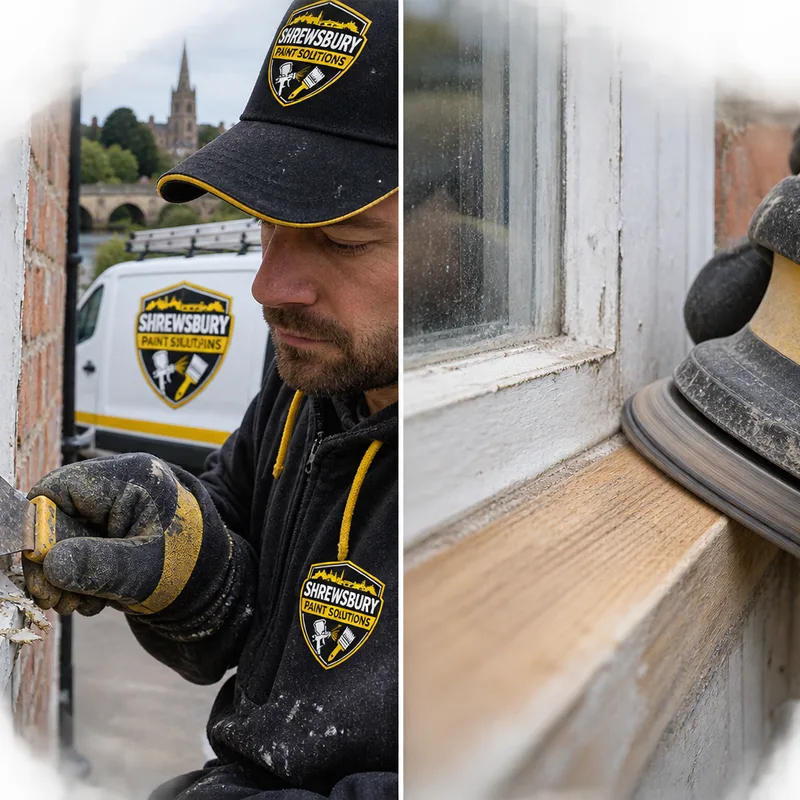
A durable paint job starts with a sound, clean and dry surface. Preparation may include washing away dirt, removing loose paint, scraping unstable edges and sanding them back. Small defects can then be addressed with an exterior-grade product suited to the material. Bare or porous areas may need spot priming before the main coating system is applied.
Timber needs a different approach from render or masonry. Open joints, exposed end grain and decayed areas must be identified before painting, as a decorative coating cannot repair unsound wood. Metal fittings may need rust removal and an appropriate primer. On walls, persistent damp or active water ingress should be investigated rather than hidden beneath paint.
Shrewsbury's wet spells make timing important. Exterior coatings normally need a dry substrate, suitable temperatures and enough rain-free time to cure as intended. We plan the work around the product instructions and conditions on the day rather than applying paint simply because access has been arranged.
From Enquiry to Finish
Tell Shrewsbury Paint Solutions which surfaces need attention, the finish you have in mind and any known access concerns. Photographs sent on WhatsApp can help with an initial estimate.
We consider the substrate, existing coating, preparation required and practical access. This also identifies whether ladders, specialist access arrangements or additional protection may affect the scope.
The proposed work is set out around the surfaces to be painted, expected preparation and suitable coating system. Colour and finish choices can be discussed before materials are ordered.
Windows, paving, fixtures and nearby areas are protected as required. Surfaces are then cleaned and prepared so the coating is applied to a stable base.
Paint is brushed, rolled or sprayed where suitable, following the requirements of the chosen product. Work is kept tidy and protection is removed after the painted areas are checked.
Coating Selection
The correct coating depends on the substrate and what is already on it. Masonry paint is made for sound exterior render, brickwork or similar mineral surfaces, subject to the manufacturer's stated uses. Breathable systems may be considered where the construction and existing coating call for them. Painting over a failing or incompatible layer can leave the new finish attached to paint that is already coming away.
Exterior timber products include primers, undercoats, opaque topcoats and stains. The choice depends on whether the grain should remain visible, the condition of the wood and the coating already present. Gloss, satin and lower-sheen finishes also differ in appearance and maintenance needs. Metal surfaces require a compatible preparation and primer system, especially where rust or bare metal is present.
Colour matters beyond appearance. Samples can look different outdoors as daylight changes, so testing a small area is often more useful than relying on a screen. Planning restrictions or listed-building controls may also affect work to some properties. Shropshire Council can confirm whether consent is required for a particular address; the property owner is responsible for obtaining any necessary approval.
Typical Costs
Exterior painting costs depend on the surface area, existing coating, preparation, repairs and access required. Materials and any specialist access equipment also affect the estimate. Send photographs for an initial discussion, followed by an assessment before the scope and price are agreed.
Send photographs for an initial estimate and a practical discussion about the surfaces, preparation and access involved.
Call for a Free EstimateWorkmanship in Detail

Helpful Answers
Exterior painting is best scheduled for a dry period with temperatures and humidity within the coating manufacturer's stated limits. Shropshire weather can change quickly, so the surface condition and short-term forecast matter more than the month alone. Paint should not be applied to wet substrates or when rain, frost or heavy condensation is likely to interfere with curing.
A small door, frame or shed may take a few working visits, while a full house exterior can take considerably longer. Preparation, drying time between coats, repairs, access and weather all affect the programme. Shrewsbury Paint Solutions discusses the likely sequence after assessing the property.
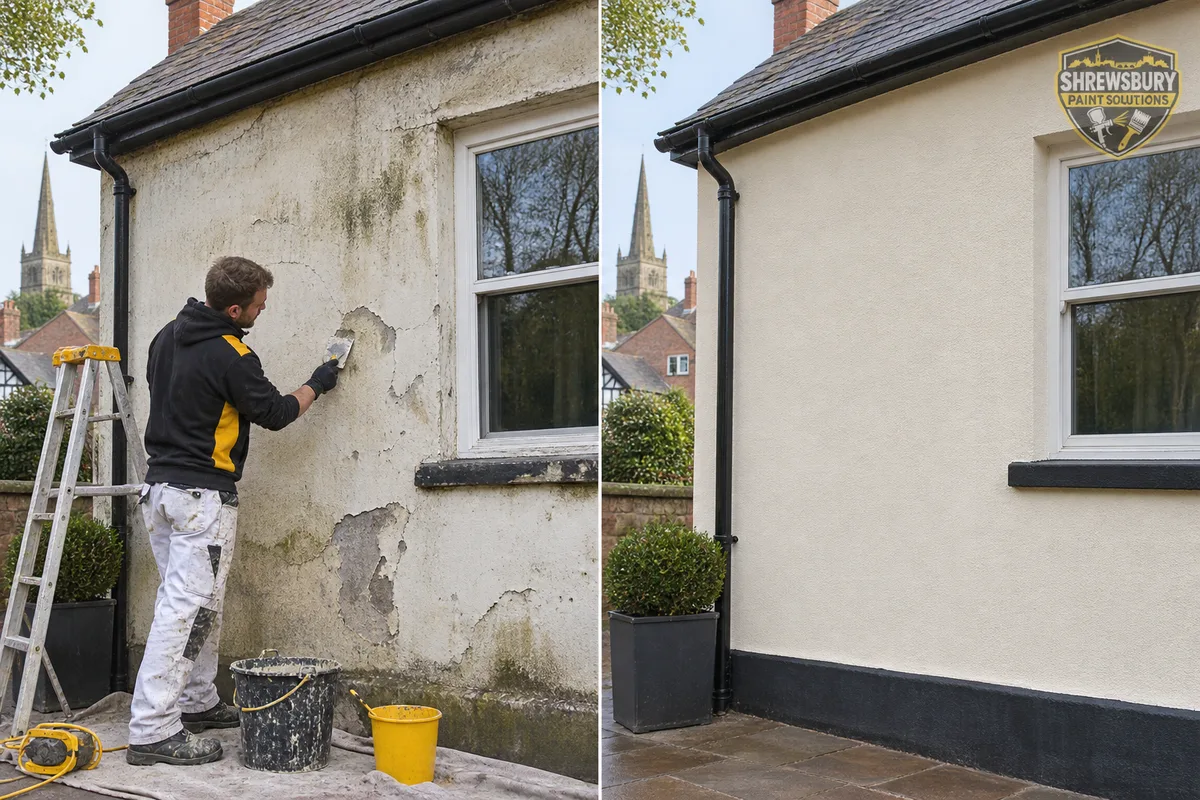
Loose and peeling paint should be removed back to a sound edge before repainting. Minor stable defects may be prepared with a suitable exterior product, but active movement, rotten timber or water ingress needs proper attention first. New paint cannot stabilise a failing substrate.
Access requirements are assessed as part of the scope because safe working arrangements depend on height, ground conditions and the surfaces being painted. Some work may be accessible by ladder, while larger elevations or awkward areas may require specialist access. Any relevant access requirement should be agreed before work begins.
Yes, photographs sent on WhatsApp can be used by Shrewsbury Paint Solutions for an initial estimate. Clear images of each elevation, close views of peeling or damaged areas and photographs showing access are useful. A closer assessment may still be needed before the exact scope and cost are confirmed.
Yes, smaller jobs are welcome. These can include a door, window frames, a gate, a shed or another limited exterior area in Shrewsbury or a nearby Shropshire village. The same need for suitable preparation and compatible paint applies even when the area is small.
Spray painting is used only where it suits the surface, access and surroundings. Wind, nearby vehicles, glazing, neighbouring property and planting all affect overspray control. Brushing or rolling may provide better control for detailed woodwork and confined residential areas.
Plan Your Project
Describe the surfaces you want painted, their current condition and any access concerns. Stephen Meredith can review photographs for an initial estimate and discuss the assessment needed before the work is agreed.