
Fence panel painting
Preparation and coating for suitable sound fence panels and posts, with plants, paving, walls and neighbouring areas protected as required.
Serving Shrewsbury, England & surrounding areas
Est. 2026

Fence & Shed Painting · Shrewsbury
Preparation and painting for fences, sheds, log cabins and other sound exterior timber, with nearby plants, paving and property protected.
Exterior Timber Painting
Shrewsbury Paint Solutions paints fences, sheds, log cabins and other suitable exterior woodwork. Stephen Meredith runs the business himself, assessing the timber, old coating, access and surroundings before recommending preparation and a suitable finish.
Exterior timber must be sound and dry enough for the selected product. Loose or failing coating is removed as required, surfaces are cleaned and prepared, and rotten or structurally unsound timber needs repair before painting can begin.
Work is planned for suitable dry weather. Plants, paving, walls, vehicles and neighbouring property are considered and protected as needed. Spraying is used only where masking and overspray can be controlled; brush or roller application may be more suitable in tighter settings. Customers can send photographs on WhatsApp for an initial estimate.
Timber & Garden Woodwork
Preparation and coating for suitable sound fence panels and posts, with plants, paving, walls and neighbouring areas protected as required.
Shed walls, doors, frames and accessible trim prepared and painted with products suited to the timber, existing treatment and exposure.
Suitable log cabins can be assessed for preparation and recoating, including compatibility with the existing treatment and the timber's condition.
Gates, screens and other exterior woodwork can be brushed, rolled or sprayed where the condition, coating and surroundings make that method suitable.
Brush, roller or spray application is selected for the surface and setting. Masking, wind, overspray control, access and nearby property are assessed first.
Surface Preparation
A lasting painted finish starts with a sound surface. Loose or flaking material needs to be removed, defects assessed, and dusty or contaminated areas cleaned before a new coating is applied. Bare timber may need a suitable primer, while previously painted surfaces can require sanding and spot priming. The exact work depends on what is found during the assessment.
Protection is part of the preparation. Plants can be tied back or covered where appropriate, paving and walls are shielded, and nearby vehicles or loose garden items should be moved. Neighbouring property and gaps in fencing are considered before any spraying begins.
Product choice is based on the timber, existing treatment, location and exposure. Painting is scheduled for suitable dry weather, and timber must be sound and dry enough for the selected finish before coating begins.
Exterior Timber
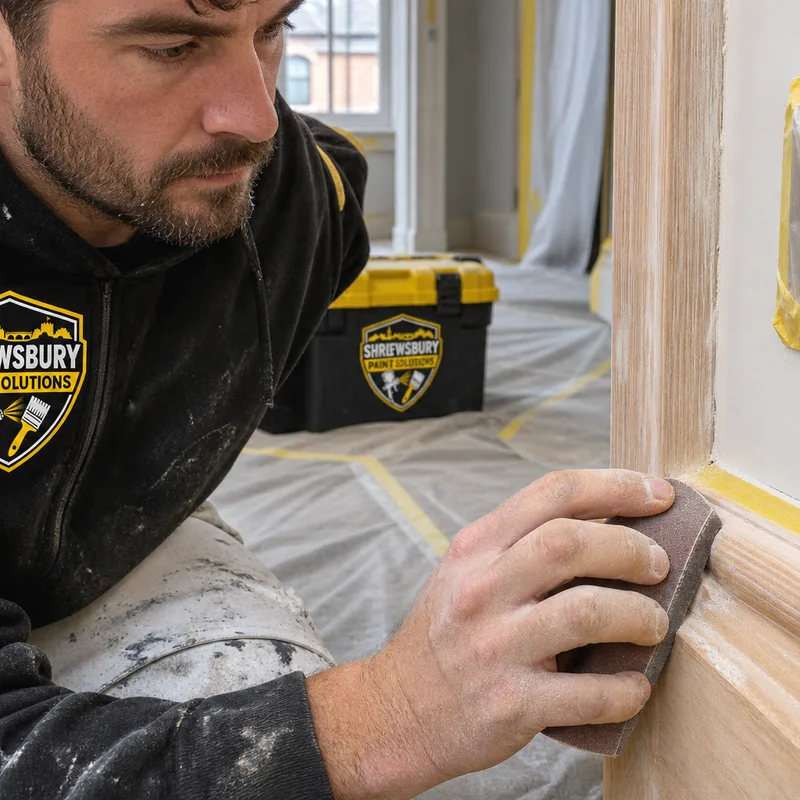
Exterior timber needs close inspection before it is painted. Moisture, splitting, loose old coating and exposed end grain can all affect the preparation and product choice. Sound paint should be cleaned and abraded as required, while failed coating needs to be removed rather than hidden under another layer.
For woodwork painting in Shrewsbury, the finish is selected according to the item and its exposure. Internal doors and trim have different demands from fencing, sheds or log cabins exposed to rain and changing temperatures. Shrewsbury's weather also means exterior work must be planned for a suitable dry period, with enough time for prepared timber and each coat to dry as the manufacturer requires.
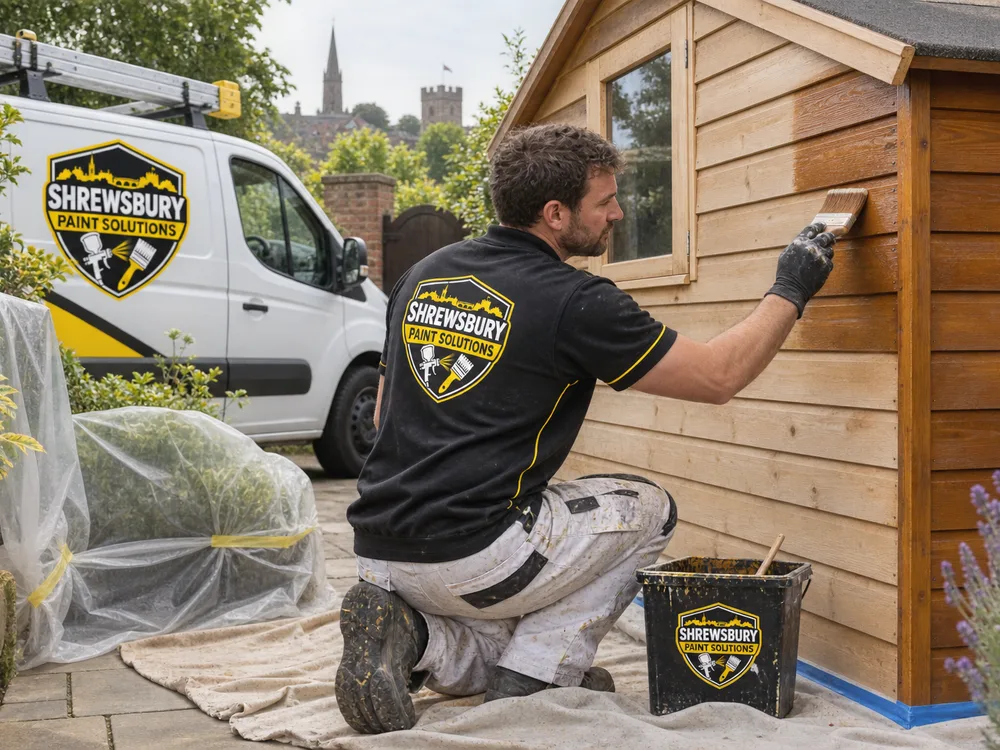
Shed painting in Shrewsbury can cover walls, doors, frames and other accessible timber. The assessment checks whether the existing coating is compatible with the proposed finish and whether repairs are needed before painting. Rotten or structurally unsound timber is not corrected by paint and should be dealt with before decoration begins.
Application Method
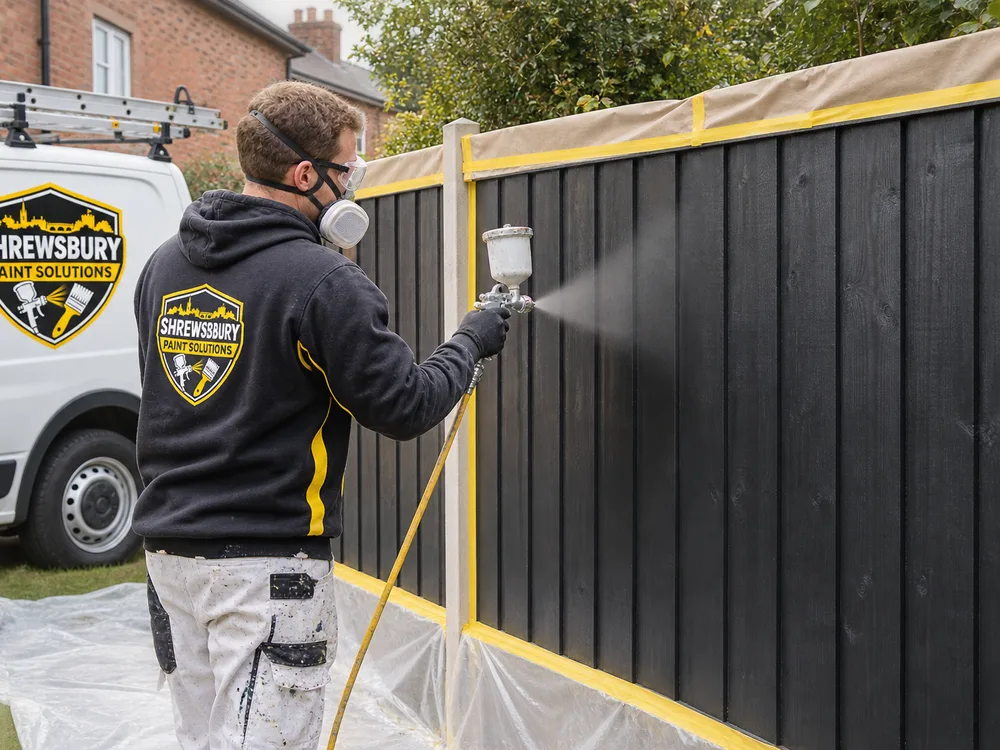
Fence spraying in Shrewsbury can be efficient on long, accessible runs of sound fencing, but it is not automatically the right method for every boundary. Wind, gaps between boards, nearby buildings, parked vehicles and neighbouring property all affect overspray risk. Plants and hard surfaces also need suitable protection.
Brush application gives more control around posts, edges, hardware and tight boundaries. It can also help work coating into rough or irregular timber. A roller may suit some broad surfaces, while spraying can provide consistent coverage where access and containment are practical. Fence painting in Shrewsbury is therefore assessed by condition and setting, not simply by the fastest application method.
The coating matters too. A finish intended for exterior timber should be compatible with any existing treatment and applied to timber that is dry enough for the chosen product. Very weathered boards may absorb coating unevenly and need additional attention. Photographs can help with an initial discussion, but the surrounding area and timber condition must be considered before the application method is confirmed.
From Enquiry to Finish
Describe the fence, shed, log cabin or other exterior timber and the finish you want. Photographs sent by WhatsApp can support an initial estimate.
The next step checks access, whether the timber is sound and dry, the existing coating and the preparation required. For spray work, wind, fence gaps, masking, plants, paving, vehicles and neighbouring property are considered.
The proposed preparation, surfaces to be painted and suitable finish are set out so the scope is understood before work begins.
Plants, paving, walls and nearby items are protected as required. Sound timber is then cleaned, repaired, sanded or primed according to its condition and the selected product.
The finish is brushed, rolled or sprayed as appropriate in suitable dry weather. Overspray is controlled, and drying requirements are followed before coverings are removed.
Painted Applications

Send photographs and a short description of the work for an initial estimate, followed by an assessment of the surfaces, access and preparation required.
Call for a Free EstimateHelpful Answers
Estimates depend on the size and condition of the timber, preparation and repairs, access, protection requirements, application method and chosen finish. Photographs can support an initial estimate before the work is assessed and the scope confirmed.
Plants, paving, walls, vehicles and nearby items are covered or moved where practical. Wind direction, fence gaps and neighbouring land are considered before spraying; brush or roller application is used when it offers better control.
Fence spraying is suitable only when overspray can be properly controlled. Wind direction, open board gaps, nearby vehicles, plants, walls and neighbouring land all need consideration. In tighter Shrewsbury properties, brush or roller application may provide better control than spraying.
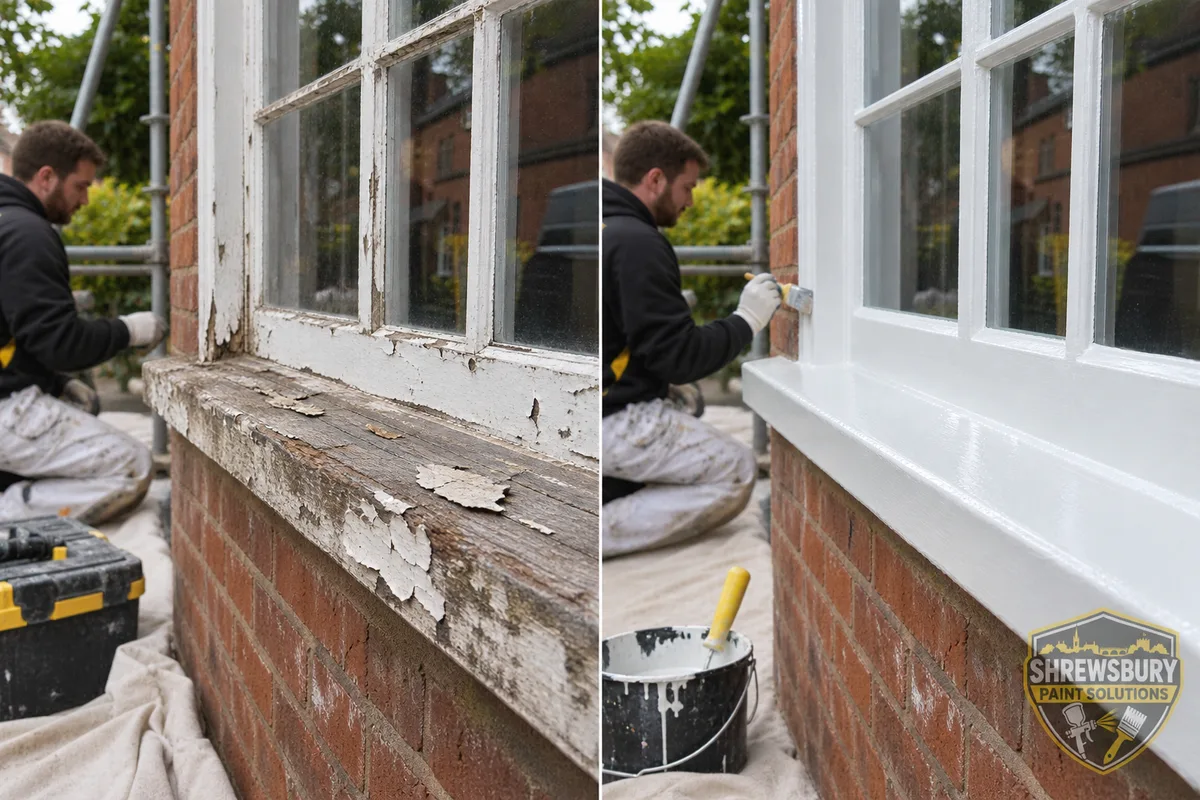
A peeling shed can often be repainted after the failed coating is removed and the timber is assessed. The surface may need cleaning, sanding and spot priming, and the new product must be compatible with the remaining sound coating. Damp, rotten or unsound timber needs attention before painting.
The suitable finish depends on the timber, existing treatment, exposure and the manufacturer's requirements. The timber must be sound and dry enough for the selected product, and any incompatible or failed coating needs attention first.
Yes, suitable sound exterior timber can be assessed for painting, including sheds, log cabins, gates and other garden woodwork. The existing treatment, condition, access and required preparation determine what can be included.
Exterior painting needs suitable weather and a surface dry enough for the specified coating. Rain, damp surfaces and temperatures outside the manufacturer's application limits can delay preparation or painting. Timing is considered when the work is assessed rather than relying on a fixed seasonal date.
Plan Your Project
Tell Stephen what exterior timber needs painting and send photographs for an initial estimate. The final scope depends on size, condition, preparation, access, protection requirements and the selected finish.