Walls
Airless spraying can apply an even coating across larger wall areas. Repairs, filled holes and uneven patches are prepared first because sprayed paint does not hide poor groundwork.
Serving Shrewsbury, England & surrounding areas
Est. 2026
Spray Painting · Shrewsbury
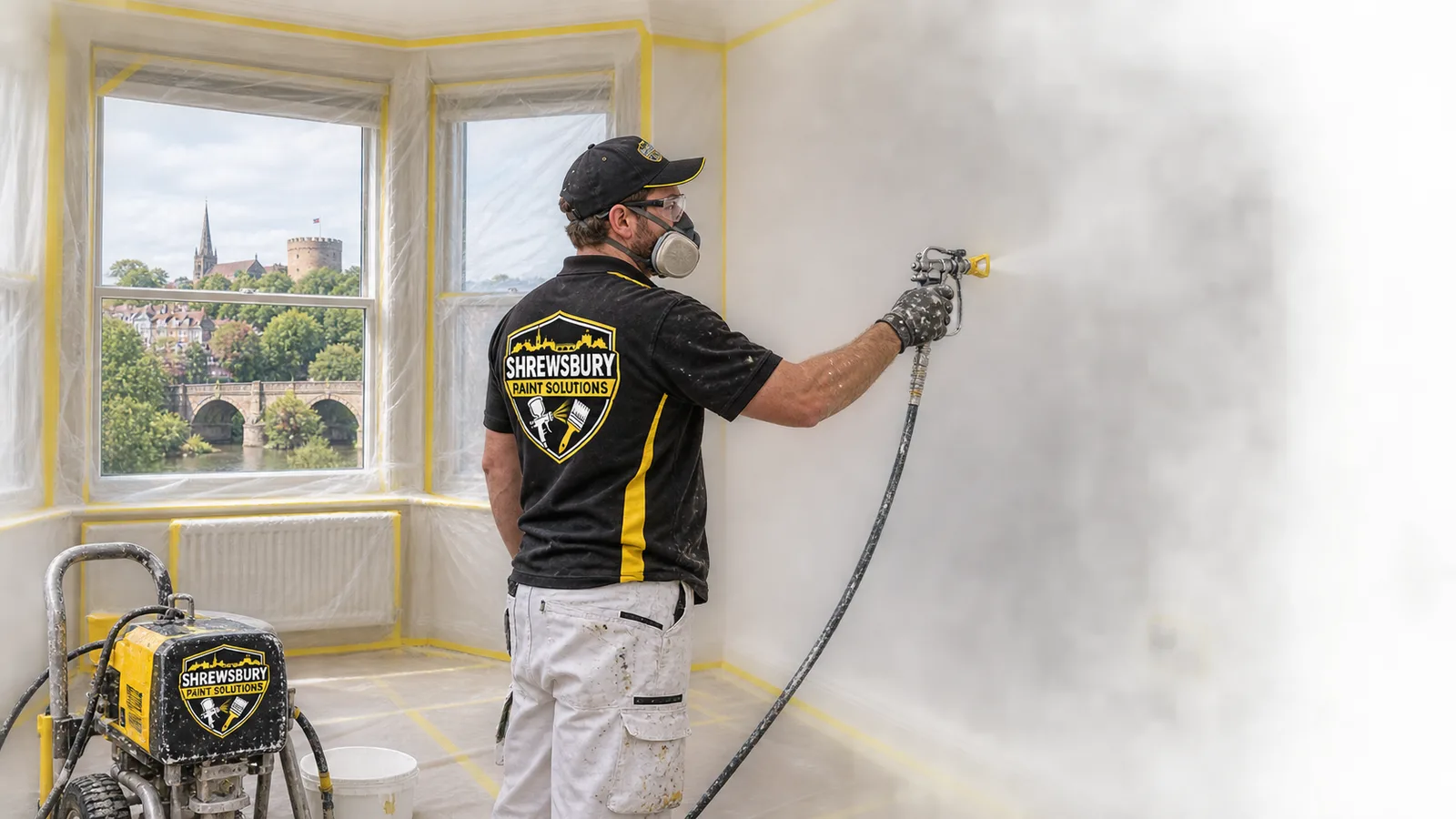
A smooth, even finish for interior walls, ceilings, doors and trim, backed by careful preparation and thorough protection of the surrounding room.
Interior Paint Spraying
Spray painting can give interiors in Shrewsbury a smooth, consistent finish. It is particularly useful across broad walls and ceilings, as well as doors, fitted joinery, skirting boards, architraves and other detailed woodwork.
The quality of the result depends heavily on preparation. Loose material, dents, cracks and rough repairs can remain visible beneath sprayed paint, so surfaces must be checked and prepared before the first coat. Masking is equally important because atomised paint can travel beyond the surface being coated. Floors, furniture, glazing, sockets and adjacent finishes need suitable protection.
Shrewsbury Paint Solutions is an owner-operated business run by Stephen Meredith, with preparation and application methods chosen for the surface and setting. The business is run by Stephen Meredith and was founded in 2026. Smaller jobs are welcome alongside larger interior schemes, and Dulux Trade paints are used where appropriate.
Suitable Interiors
Paint spraying in Shrewsbury is suitable for many empty or partly cleared rooms where masking and controlled access can be arranged. Walls and ceilings are common candidates because spraying applies paint quickly and consistently across broad areas. It can also give doors and trim a refined finish when the coating, nozzle and pressure are matched to the material.
Spraying is not automatically the right method for every job. A small occupied room with many items to protect may be more practical to brush and roll. Surface condition matters too. Fresh plaster may require an appropriate first coat, while existing gloss paint usually needs cleaning, keying and suitable preparation before recoating. Previously painted wood can reveal chips and old brush marks unless those defects are dealt with first.
Stephen assesses the room, access, substrate and required finish before recommending a method. The aim is to use spraying where it offers a real finish or efficiency benefit, rather than treating it as the default for every surface.
Walls, Ceilings & Trim
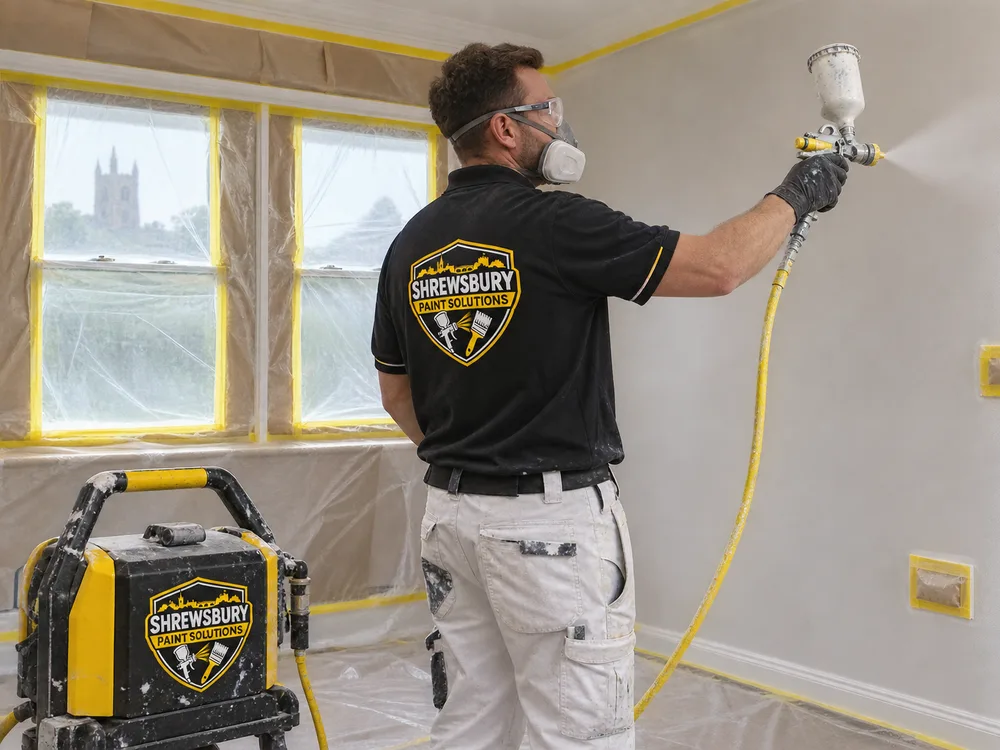
Airless spraying can apply an even coating across larger wall areas. Repairs, filled holes and uneven patches are prepared first because sprayed paint does not hide poor groundwork.
Spraying is useful for broad ceilings and can reduce visible application marks. Light fittings, cornices, walls and the whole floor area must be protected.
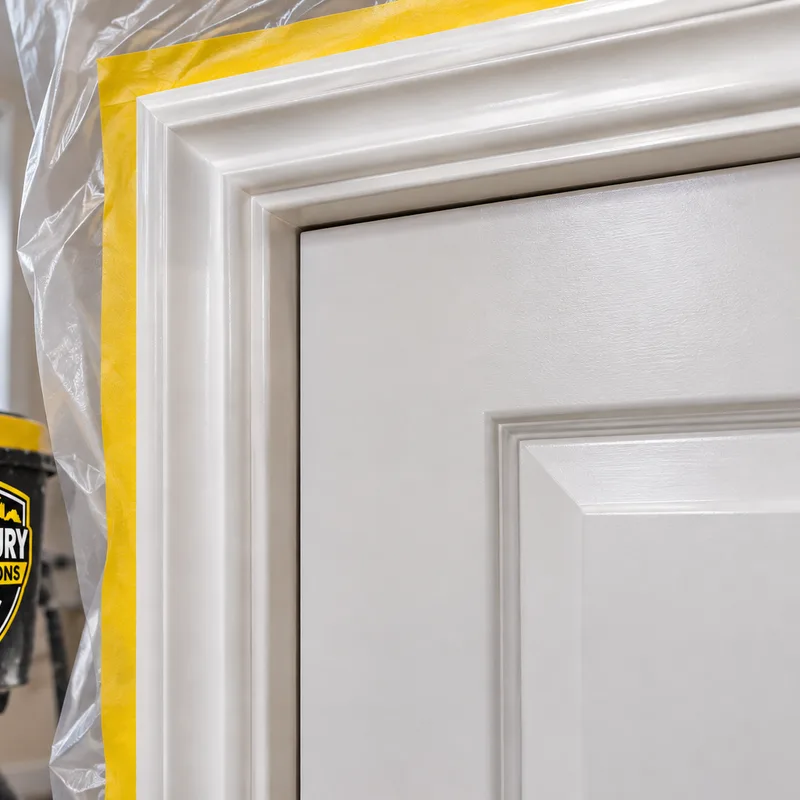
A suitable sprayed finish can leave door faces and frames looking smooth. Existing coatings are checked for sound adhesion before sanding, priming and topcoating.
Detailed trim can be sprayed when adjoining walls and floors can be masked properly. The chosen product must suit timber, MDF or the existing coating.
Some built-in cupboards, shelving and other fixed joinery may be suitable after an assessment of their material, condition, hardware and surrounding surfaces.
New surfaces need to be dry and prepared for the specified coating system. Joints, screw heads and repairs must be finished properly before paint is applied.
Masking & Protection
Preparation is planned around both the surface and the building. Shrewsbury has everything from older properties near the town centre to later suburban homes, and their interiors can present different issues. Older plaster may contain previous repairs, fine cracking or unstable coatings. Later dry-lined rooms can show joint lines, popped fixings or local damage under strong side lighting. These conditions are assessed rather than covered without treatment.
Rooms should be cleared as far as practical. Furniture that remains is grouped and fully covered, while floors receive suitable protection. Windows, radiators, switches, sockets and fittings are masked according to the work. Where spraying is limited to woodwork, adjoining walls need accurate masking so the edge remains clean.
Controlling dust is also important. Sanding residue can settle into wet coatings and affect the finish, so preparation dust must be removed before spraying starts. Ventilation and access are considered as part of the plan, particularly during cooler, wetter Shropshire weather when opening windows may not provide ideal drying conditions. Product instructions, room temperature and airflow guide the time allowed between coats.
From Enquiry to Finish
Describe the rooms or items involved and the finish you want. Photos can be sent through WhatsApp for an initial estimate, which is useful for showing the current condition and amount of furniture.
Shrewsbury Paint Solutions checks the substrate, existing coatings, repairs, access and masking requirements. This assessment determines whether spraying is suitable and what preparation is needed.
The surfaces, coating system and practical arrangements are clarified before work starts. This includes what must be moved, what will be protected and whether parts of the job are better brushed or rolled.
Surfaces are cleaned and prepared as required. Floors, furniture and adjacent areas are covered, while fittings and edges are masked to control overspray.
Paint is applied using settings appropriate to the product and surface. Coats are allowed to dry as specified, then the work is checked before masking and protection are removed.
Application & Finish
A spray gun is only one part of the system. The coating must be suitable for the substrate and prepared to the manufacturer's instructions. Tip size, pressure, spray distance and overlap all affect how evenly paint lands. Too much material can cause runs or heavy edges, while poor atomisation can leave an uneven texture.
The condition of the surface remains visible after spraying. Strong daylight can expose ridges around filled areas, scratches in old paint and poorly finished plaster joints. For this reason, preparation is agreed in relation to the finish expected. A straightforward refresh of a sound surface requires different work from restoring damaged woodwork or correcting extensive wall defects.
Colour changes can also affect the number of coats. Moving between strongly contrasting colours may require extra coverage or an appropriate primer. Shrewsbury Paint Solutions chooses finishes for the particular surface and uses Dulux Trade paint where appropriate.
Send photos of the room, walls, ceilings or woodwork for an initial estimate, followed by an assessment of the access, surface condition and preparation required.
Call for a Free EstimateHelpful Answers
The cost depends on the area, surface condition, required finish, paint system and amount of masking involved. An empty room with sound walls is different from an occupied interior containing damaged plaster and detailed trim. Shrewsbury Paint Solutions can use photos for an initial estimate, then assess access and the work required before confirming the scope.
Spraying is better when a very even finish is wanted and the room can be protected efficiently, but rolling may be more practical in smaller occupied spaces. A sprayed wall generally has less roller texture, while doors and trim can be completed without brush marks. The right choice depends on the substrate, layout and masking time.
A furnished room may be possible if enough space can be cleared and everything remaining can be fully protected. Paint mist must be contained, so furniture, floors, windows and fittings need careful covering. Sending photos helps Stephen Meredith judge whether the room can be prepared safely or should be cleared further.
Yes, these surfaces can form part of the same job when the coating sequence and masking plan allow it. Ceilings, walls and timber often need different products or finishes, so each completed area may need protection before the next is sprayed. The order is planned after the surfaces have been assessed.
The timescale depends on preparation, room size, drying conditions and the number of coatings required. Masking and repairs can take longer than the spraying itself, especially around windows, fitted furniture and detailed trim. Cooler or damp Shropshire weather may also affect ventilation and drying, so product guidance is followed rather than rushing recoating.
No, sprayed paint does not hide cracks, dents, ridges or poor repairs. It can make defects easier to notice because the finished coating is even. Unsound material, filling and rough edges should be dealt with before spraying, with the preparation level agreed according to the condition of the surface.
Yes, customers can send photos on WhatsApp for an initial estimate. Useful images include a full view of each room and closer shots of cracks, peeling paint, stained areas or damaged woodwork. A further assessment of access, surface condition and the work required may be needed before the final scope is agreed.
Plan Your Project
Tell Shrewsbury Paint Solutions which surfaces need painting and the finish you have in mind. Photos can help with an initial estimate, followed by a practical assessment and a clear plan for preparation, protection and application.